
Introduction paragraph
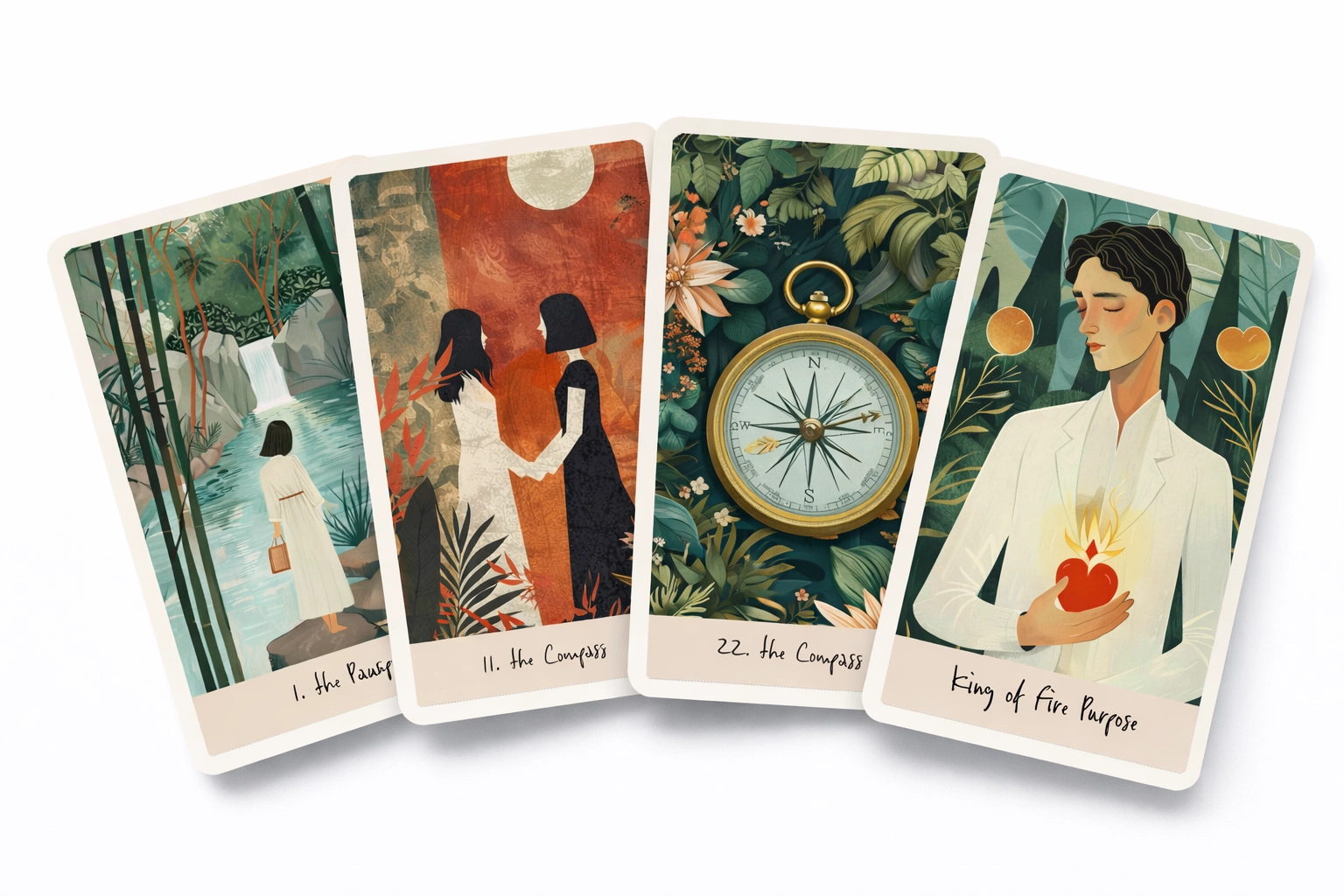
If you’re curious about Tarot but aren’t sure where to start, you’re not alone. Many people looking for beginner guidance or an online tarot reading aren’t really looking for predictions – they’re looking for reassurance, clarity, and a way to reconnect with themselves. Spiral cards offer a softer approach. Instead of telling you what the future holds, they help you stop, reflect, and notice what needs your attention right now. That’s exactly how the Spiral Cards are described on the Wellbeing Magazine product page: not as a prediction system, but as a direction deck designed to help you check your inner compass and nourish what’s missing.
Tarot for Beginners: What Most People Get Wrong
Many beginners think that tarot is about divination. This idea can make the cards look intimidating, mysterious, and even inaccessible. But Tarot can be much more supportive when seen as a reflective practice rather than a divination.
Spiral cards are especially useful for this shift in understanding because they are built around orientation, not results. The product page explains that while many Tarot-style decks focus on what happens, this deck focuses on where you are and what you need.
Tarot is not about fixed results
Tarot doesn’t have to be about predicting the future. It can be a way to explore your feelings, thoughts, patterns and next steps.
Tarot can be a practice of well-being
Instead of asking, “What’s wrong with me?” A more supportive question is, “What do I need to focus on today?”
This is why beginners often work with softer decks
A beginner-friendly deck helps eliminate fear, stress, and dependency. Spiral cards are designed to offer a fearless, non-dependent understanding and a calmer relationship with change.
What are Spiral Cards?
Spiral cards are a modern and well-being alternative for people who are drawn to Tarot but want a more grounded and compassionate experience. They are created through the Spiral philosophy of Wellbeing Magazine and are based on two interconnected frameworks: Health compass and The spiral of health. The product page states that the deck is built on the four directions of the Compass – Earth, Air, Water and Fire – together with seven spiral steps.
Health compass
The Compass maps four pillars of well-being:
Earth – Body and life
Energy, sleep, movement, hormones and body signals.
Air – Intelligence and awareness
Attitudes, Beliefs, Attention, and Emotional Literacy.
Water – Nervous system and safety
Stress response, regulation, relaxation, recovery and capacity.
Fire – Connection and meaning
Affiliation, relationships, purpose, nature and inheritance.
The spiral of well-being
A spiral represents well-being as non-linear. The seven steps to repeat on a product page are:
Pause
Listen
Stabilize
Feeding
Reconnect
Reconstruction
Integrate
These are described as states, not achievements, and the system is designed to be revised repeatedly.
How to read Tarot cards as a beginner
If you’re new to Tarot, the easiest place to start is with one card and one honest question.
Step 1: Set an intention
Sit quietly and ask:
“What’s wrong with me today?”
This reflects one of the suggested uses on Spiral’s product page: the Compass one-card check.
Step 2: Draw a card
You don’t need to know every card meaning. Let the image, words and feelings guide you.
Step 3: Reflect, not predict
Ask yourself:
What does this card do for me?
Where do I feel out of balance?
What restores stability or clarity?
Step 4: Write your opinion
The Spiral system is designed to work well with journaling and reflection. The product page also points readers to the Spiral app where readings can be saved and recorded.
Why people looking for online Tarot readings may prefer spiral cards
Many people look for Tarot readings online because they want quick answers. But quick answers don’t always equal meaningful guidance.
The Spiral approach offers something different: a direction-based reading experience that helps you see where you are, what you’ve lost, and what can restore balance. The product page even offers a free online reading and describes it as directional rather than predictive.
Better than passive prediction
Instead of receiving a passive response, you are actively thinking about your life.
Better for everyday well-being
The deck is intended for burn recovery, medium transition, spiritual life, and reflection of the safety of the nervous system.
It is better to have long-term self-confidence
The more you work with the cards in this way, the more you build your internal compass.
What makes spiral cards different?
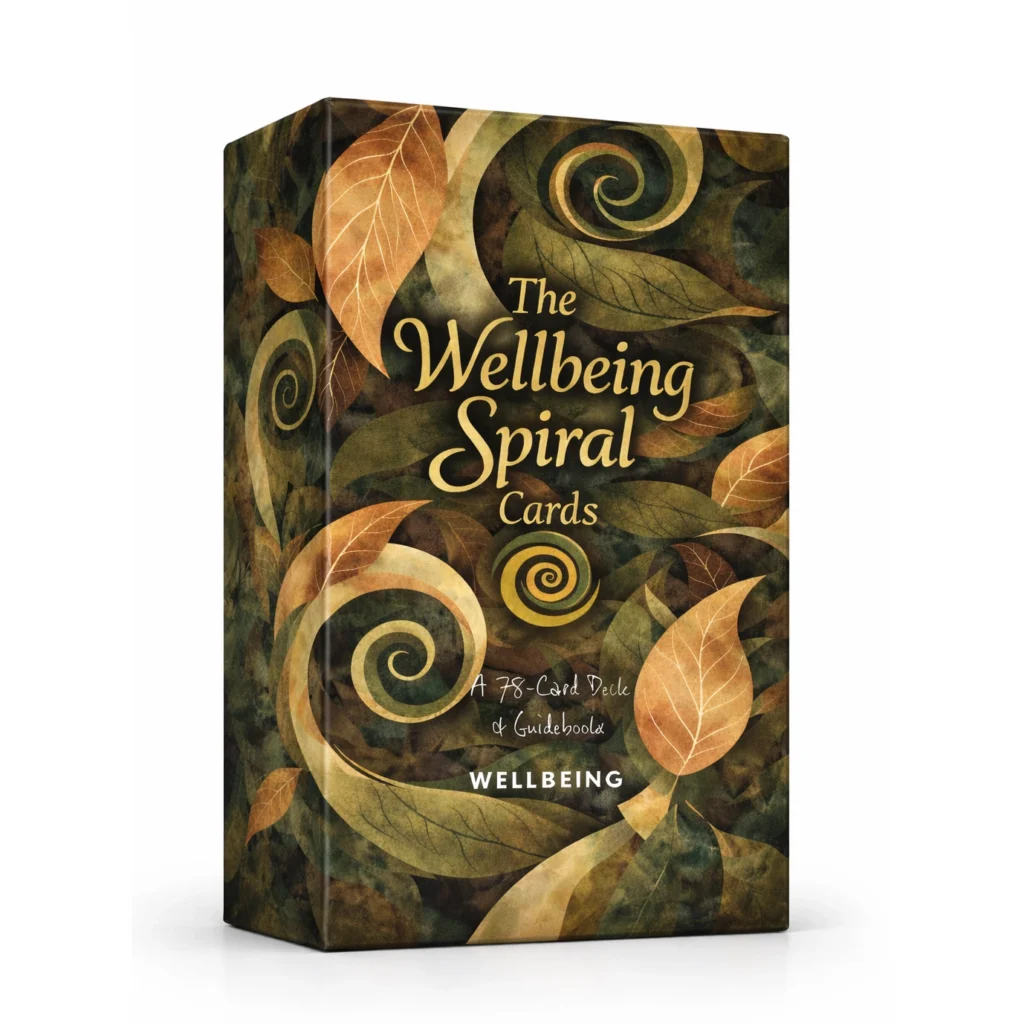
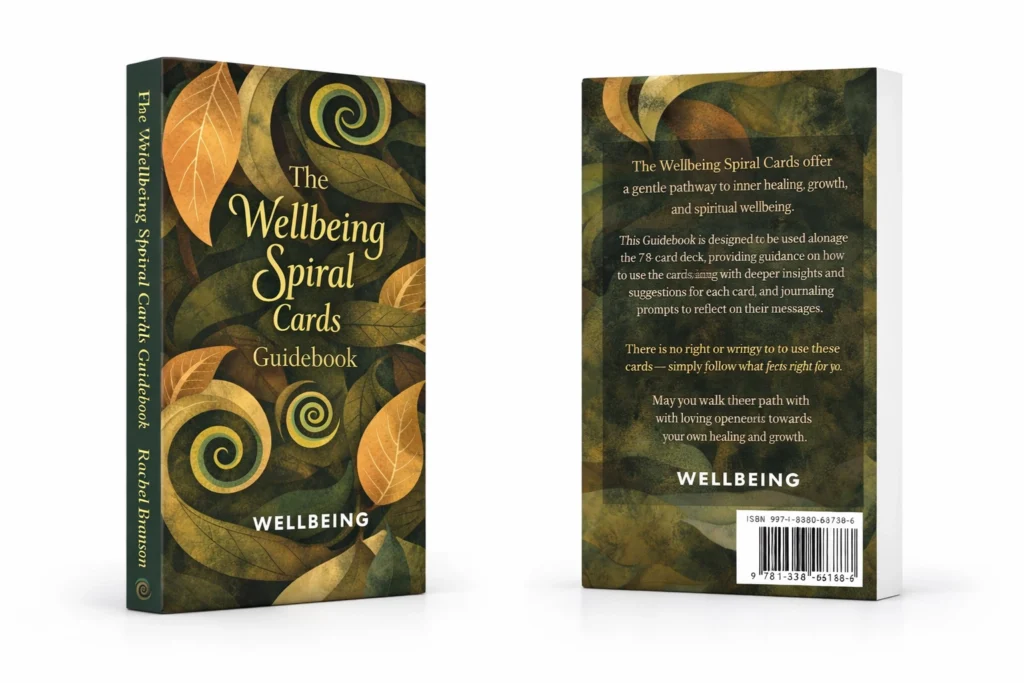
The product page notes several features that make this deck stand out. It includes 78 cardswith the Major Arcana, Minor Arcana and Card Cards, and is paired with one A book of 180 pages for a deeper understanding.
No prediction
Deck avoids divination language and is positioned as compassionate, grounded and practical.
Beginner friendly
The product page clearly states that you don’t need to “know the cards” to use the deck.
Designed for modern life
Recommended uses include journaling, gentle decision-making, transitions, retreats, and quiet morning recovery.
Beautifully illustrated
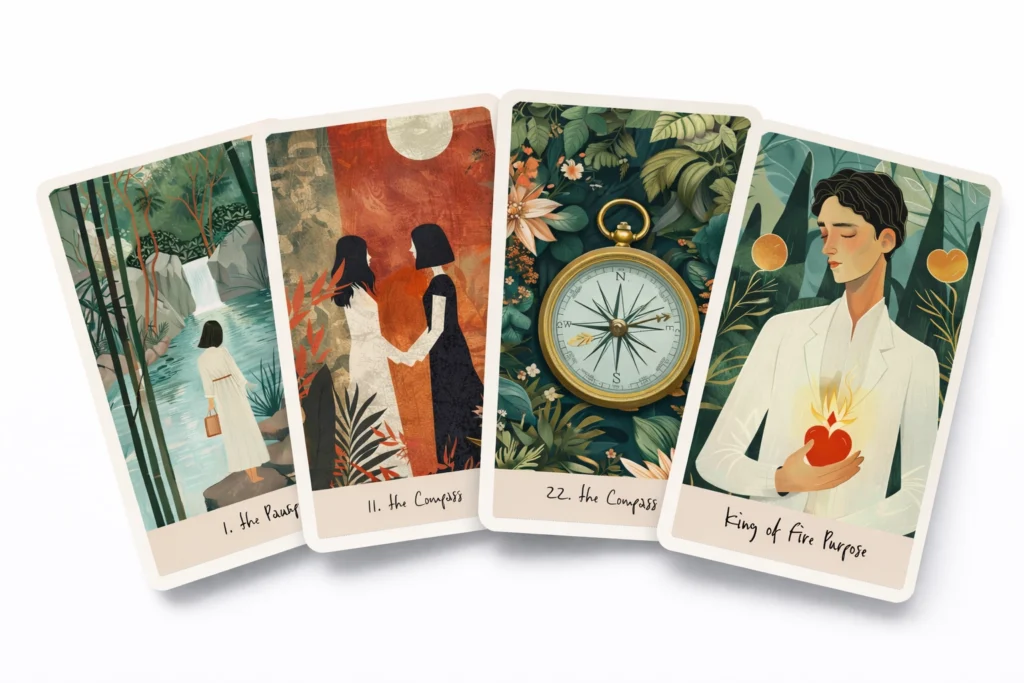
The visual direction is described as quiet luxury, natural, painterly and symbolic, inspired by botanical stories.
How to use spiral cards in daily or weekly rituals
A daily ritual
In the morning, draw a card and ask:
What needs my attention today?
Ritual of the week
Draw a card at the beginning of the week and use it as your focus.
At the crossroads
When faced with uncertainty, use the three-card spread:
where am i now
What is missing?
What restores balance?
This is presented directly with the “Trend of Three Cards” on the product page.
A thoughtful gift for beginners and card lovers
Spiral cards also work beautifully as gifts. Since the deck includes a substantial manual and is supported by a companion digital experience, it can appeal to both experienced users and beginners. The product page describes the deck as something you want to put on a table, not hide in a closet, which supports its position as a practical and aesthetic object.
Ideal for beginners
No previous knowledge of Tarot is necessary.
Ideal for wellness seekers
Suitable for anyone interested in meditation, rituals or emotional clarity.
Ideal as a beautiful memory
The colorful and symbolic design gives the deck gift attractiveness as well as functional value.
Start your spiral
If you want to begin a tarot reading in a way that feels calm, grounded, and supportive, the Spiral Cards offer a gentle place to start. They are designed not to tell you who to be, but to help you reconnect with what you already know.
Explore the deck
Spiral direction cards and instructions
https://wellbeingmagazine.com/product/spiral-orientation-cards-guidebook/
Check out the partnership experience
Spiral Program / Free Reading
https://spiral.wellbeingmagazine.com/
Frequently asked questions
How do you read tarot cards as a beginner?
Start with a card and a simple question. Focus on reflection rather than prediction. A beginner-friendly deck or guide can make the process much easier.
Are tarot cards meant to predict the future?
Not necessarily. Many people now use Tarot as a reflective tool for clarity, self-awareness, and decision-making, rather than divination.
How are the Spiral cards different from the Tarot?
Spiral cards are not based on prophecy. They are built around the wellness compass and wellness spiral with an emphasis on reflection, the language of nervous system safety, and practical insight.
How many cards are there in a spiral deck?
The product page says the deck has 78 cards.
Does the board come with an instruction manual?
Yes. The product page says it includes a 180-page manual designed to help users go deeper with the cards.
Can beginners use spiral cards?
Yes. The product page specifically states that you don’t need to “know the cards” to use the deck.
Can I use spiral cards as part of a ceremony?
Yes. Suggested uses include morning updates, journaling, transitions, retreats, and soft decision making.
Is it possible to study online?
Yes. The product page links to a free online reading that is described as directional rather than predictive.
- About the Author
- Latest news

Our editorial team are writers and experts in their field. Their views and opinions are not necessarily those of Wellbeing Magazine. If you are under medical supervision, talk to your doctor or therapist before following the advice and recommendations in this article.


