

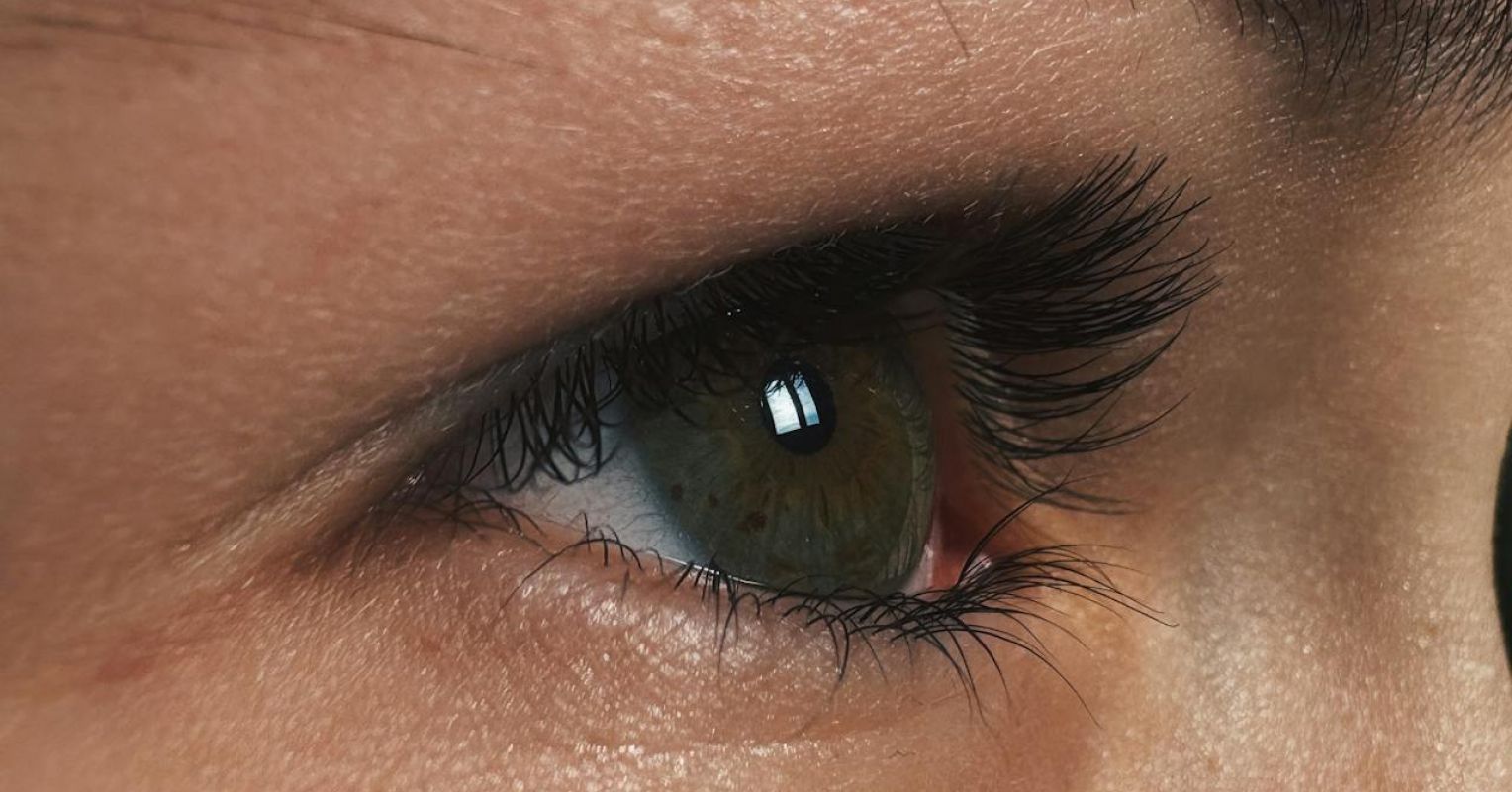
Bright and clear eyes often give the impression of youth, energy and health. Red or yellow eyes can indicate fatigue or illness. Blue eyes are often romanticized in movies, paintings, and popular culture. And the “white of the eye” is usually considered the most attractive when it is as white and clear as possible. But in our recent research, we found that the story is not so simple.
In our research, we addressed this question in a large and diverse set of faces. We studied over 1,000 faces from several culturally diverse populations and measured subtle differences in the eye region. We looked at the color of the iris, but also the color of the visible tissue around the iris, often called the white of the eye or sclera. Technically, this visible area is part of the peri-iridial tissue.
We then examined whether these eye characteristics predicted their ratings attractivenessfemininity and masculinity. Raters rated faces from their own population. This is important because people tend to be more familiar with the range of faces they see around them. What seems normal, attractive, or unusual may depend in part on the changing local face and cultural experience.
One of the most important findings of our study was that eye color is more important for female faces than for male faces. In women, slightly darker whites of the eyes were associated with higher femininity. And because feminine faces were also rated as more attractive by women, this suggests that the color of the eye region may affect attractiveness in part by changing the appearance of women. In other words, lighter is not always better when it comes to the eye. Thus, the eye area can affect attractiveness not only by keeping the face healthy or unhealthy, but also by making it appear more or less feminine.
The pattern was weaker for male faces. Eye color did not strongly or consistently predict attractiveness or masculinity. This suggests that the color of the eye region may play a more prominent role in the judgments of attractiveness and femininity than in the evaluations of attractiveness and masculinity of men.
This does not mean that unhealthy eyes are attractive. This would be a wrong conclusion. Red, yellow, irritated or tired eyes can still give a negative impression. Rather, the point is that the relationship between eye color and attractiveness is more subtle than people think. The most attractive or feminine look can come from a more natural balance rather than maximum whiteness.
Iris tells a different story
The iris, or colored part of the eye, was slightly different from the whites of the eye. Across the sample, women with less yellow sclera or blue irises were rated more attractive. But when we looked at individual populations, this pattern was not the same everywhere. The clearest evidence was found in samples from Turkish and Czech women, where blue irises were associated with high attractiveness.
These cultural differences are important. There was relatively large variation in iris brightness in the Turkish sample, including some blue-eyed women. In the Colombian sample, there was also significant variation in iris color, possibly reflecting mixed European, indigenous, African, and mestizo races.
In contrast, in samples from Vietnam, Iran, and Cameroon, iris color was mostly in the brown range, with little or no variation in blue, green, or fawn. In India, there was a slight difference, but the irises were still very dark. In these samples, the effect of lighter or bluer irises was weaker or less reliable.
So, while iris color can affect attractiveness, it doesn’t work as a universal rule of thumb for beauty. Blue eyes are often romanticized in popular culture as rare, beautiful, mysterious, or especially desirable. But our findings suggest a more nuanced picture: iris color matters where there is enough local variation to make it socially visible.
This is different from the finding on the white of the eye. Iris refers to the colored part of the eye. A scleral or peri-iridial finding refers to the visible tissue surrounding the iris. Both are part of the eye area, but they seem to contribute to first impressions in different ways.
Beauty is not a feature
People often like the simple rules: blue eyes are attractive, white scleras are attractive, symmetry is attractive, a feminine face is feminine, and a masculine face is masculine. But real face perception is more complex. The brain does not judge each feature separately and then sums them up. It reads the face as a whole. This is why cross-cultural research is important. Humans have many basic perceptual tendencies, but we also learn from the faces around us. Familiarity, culture, environment, and local variations all shape what seems normal, interesting, or unusual.
Author’s note: My next book The psychology of attractiveness and aesthetics: how we perceive beauty in people and works of artstudies the science of beauty attractionand aesthetics: why we are attracted to certain faces, bodies, artwork, patterns, and designs, and how psychology, biology, culture, and the brain shape these preferences.


