

Many workplaces still operate on the old assumption: if workers are pushed harder, they will produce more. While short bursts of stress can sometimes improve focus, stress is the default management style.
Research from Gallup estimates that disengaged workers cost the global economy nearly $8.8 trillion in lost productivity each year. This number reflects a simple reality. People work best when they are engaged, energized and connected to their work, not when they are constantly working in survival mode.
Consider a marketing team preparing for a major product launch. A few days ahead of time may be necessary. If this tension becomes the norm over the course of months, creativity diminishes, morale weakens, and mistakes become more common. What started as a performance strategy gradually becomes a source of exhaustion.
Pressure has its place. It shouldn’t be living under it every day.
Creativity cannot thrive under constant pressure
Creativity is often touted as a competitive advantage, but many organizations unwittingly create conditions that stifle it.
When employees are overworked, their focus becomes narrow. Their focus shifts to immediate needs rather than exploration, experimentation, or innovation. Creative thinking requires cognitive space. It needs room for curiosity, reflection and fresh perspective.
Studies examining workplace innovation have found a positive relationship between job satisfaction and employees’ ability to generate, promote, and implement new ideas. The same study found that technology-related workplace stress and job demands weakened this relationship.
Imagine a software developer who spends every day responding to urgent requests. There is little opportunity to rethink processes or develop new solutions. Contrast this experience with a group that has taken time to practice and learn. An environment that encourages retention. Another encourages innovation.
The difference is not in talent. This is the environment in which talent operates.
Wellness is a productivity strategy
Employee wellness is often discussed as if it belongs in a separate category from performance. In fact, the two are intertwined.
Gallup research shows that employees who believe their organization cares about their well-being are five times more likely to be engaged and 72% less likely to experience burnout. Organizations with strong well-being also report higher productivity, lower turnover, and greater resilience during times of change.
This does not mean that organizations need redundant wellness programs. Often, the most meaningful changes are surprisingly practical.
A manager who respects boundaries after hours. A manager who encourages employees to take innocent vacations. A workplace that provides flexibility when life gets complicated.
For example, a customer service representative who cares for an elderly parent may value schedule flexibility more than any health benefits. This flexibility can reduce stress, improve focus, and strengthen commitment to the organization.
When people feel supported, they put more energy and focus into their work. Productivity becomes a natural outcome, not something forced.
Getting people to love your work is an art
Compensation issues. The benefits are important. However, no one can guarantee that employees care about what they do.
The strongest workplace cultures understand that people want more than pay. They want a goal. They want independence. They want to feel that their contribution matters.
Gallup has identified occupational well-being, or simply what you do every day, as one of the strongest predictors of overall well-being. Employees who experience meaningful work are more resilient, more engaged, and more likely to remain loyal to their organizations.
A hospital administrator who sees how their work improves patient outcomes often finds motivation outside of normal duties. A teacher who witnesses a student’s growth feels connected to a greater purpose. An employee who is confident in making decisions develops a strong sense of ownership.
Creating these experiences requires intention. Leaders need to understand what motivates their teams, recognize contributions and provide opportunities for growth.
This is where management becomes an art. The goal is not just to give work. The goal is to create an environment where people want to contribute their best.
A new formula for workplace transformation
Organizations often invest in technology, systems, and processes during change. These investments are important, but sustainable change ultimately depends on people.
Transformation is possible when leaders shift their focus from control to trust, from constant pressure to sustained performance, and from managing employees to enabling them.
Evidence increasingly supports this approach. Research linking employee well-being to organizational performance has found a positive relationship between well-being, company performance, and long-term business success. Employees who feel valued tend to collaborate more effectively, think more creatively, and stay with organizations longer.
The workplaces that will thrive in the future will necessarily be those with the most resources. They will be the ones who understand a fundamental truth: people work better when they are nice.
Employee wellness is not a soft initiative. This is a leadership strategy. This is a productivity strategy. Most importantly, this is a human strategy.
As employees progress, change occurs.
Quotes:
NOW AVAILABLE
SoulTreat Living Magical Life Magazine

Get your free copy here
Transformational Journeys Workshops
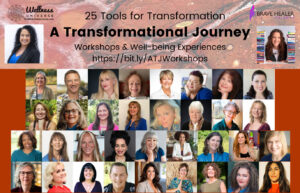
Ready for growth, healing and inspiration?
Dive deep into the tools and insights shared by our expert authors The Global Wellness Guide to Self-Care, 25 Tools for Change! Brought to life in engaging and interactive workshops that will empower and inspire you. Each author leads a workshop built around it
The unique strategies they contribute in this book will give you first hand
access to the wisdom behind the pages.
👉 Register here: https://bit.ly/ATJWorkshops
#1 BEST SELLER AVAILABLE NOW!
The Global Wellness Guide to Self-Care, 25 Tools for Change

Ready for a soft reset at real speed? The Global Wellness Guide to Self-Care: 25 Tools for Change is a 5-star Amazon favorite and readers say
“This book should be your bedside table manual.”
Open any page, select a tool, and let a small change be your next breakthrough.

Wellness World is your resource for health, wellness, wellness and transformation. We serve and support professionals who make the world a better place and individuals and groups who seek to live their best lives.
A woman’s company; Anna Pereira, who had a vision in 2013, launched the first directory in 2015, bringing together a community of members who want to make the world a better place for those who are looking for their best life. The Wellness Universe has since become a one stop shop for wellness health support! We are a verified community, online directory, book publisher, resource center, event producer, content platform, and more, supporting health and wellness on a global scale.
The Wellness Universe is a home that connects industry professionals in the fields of health, wellness and wellness with general wellness seekers. WU provides WU World-Changer members with peer support, Wellness Universe events (live and online), projects, visibility, business and community mentorship. Through The Wellness Universe, our WU World-Changer members serve WU friends, health, wellness and change seekers with coaching, workshops, content and more.
World of Wellness provides individuals and groups seeking to live their best life, access to our members, healthy content, educational resources and guidance in all areas of wellness to achieve a vision of how they want to live.
Through directory, Featured WU blog, SoulTreat health vacation, Self care booksgroup wellness programs and an online learning center, LoungeThe World of Wellness offers many ways to support your overall health, mind, body, spirit and planet.
Join us today! Health professional or Find your best life
Post Views: 1


