

When we think of living longer and aging well, we think of the gym, the kitchen, and maybe the cardiologist’s office. The dental department rarely makes the list. However, a growing body of research shows that the mouth is more closely related to the health of the entire body than most people – and many doctors – appreciate.
I want to be careful here because this is an area where marketing often trumps facts. A dental checkup is no substitute for taking care of your heart, gut, or skin.
And anyone who promises that fixing your teeth will add years to your life. But your oral health belongs in the same conversation. Here are three links to understand—each with an honest look at what science does and doesn’t yet show.
3 The connection between dental health and longevity
1. gum swelling and cardiovascular system
Periodontal disease—gum disease—is a chronic, low-grade bacterial infection that silently affects the tissues of your teeth. It is also one of the most amazing examples of the mouth affecting the rest of the body.
Numerous population-based studies, summarized in the American Heart Association’s Scientific Statement on Periodontal Disease and Cardiovascular Disease, show that people with moderate to severe gum disease have an increased risk of heart attack, stroke, and other cardiovascular events. Importantly, this association was maintained even after accounting for co-occurring risk factors such as smoking and diabetes. Periodontal bacteria such as Porphyromonas gingivalis have even been found within arterial plaques.
Here’s the honest part. Association is not proof
The AHA is clear that a cause-and-effect relationship has not been established, and there is still no direct evidence that gum disease prevents heart attacks or strokes—a conclusion echoed by the Cochrane review, which says there are too many trials to be sure.
What the treatment does reliably do is lower markers of inflammation in the blood, such as C-reactive protein, and improve the function of the lining of blood vessels — meaningful biological changes, even if its impact on hard outcomes is still being studied.
So here’s the smart read: healthy gums are a modifiable and measurable part of your cardiovascular risk picture—not a substitute for managing blood pressure, cholesterol, and smoking, but an essential piece of the puzzle that a routine dental exam can find early.
2. Oral-intestinal connection
Your mouth is home to the second largest microbial community in your body after your gut. You swallow these germs in your mouth water all day long. Some of them can reach the intestines, especially when The intestine is already inflamed. Researchers call this two-way connection the mouth-gut axis.
The facts that connect the two are really interesting. Oral bacteria are found in the intestinal tissue of people with inflammatory bowel disease; Fusobacterium nucleatum, a common oral bacterium, is consistently enriched in colon tumors; and the periodontal pathogen P. gingivalis has been linked to rheumatoid arthritis through its effects on the immune system.
In animal studies, oral administration of these bacteria can worsen intestinal inflammation.
But this is where popular health writing goes awry
In humans, most of this evidence is association rather than evidence of causation.
There is no good evidence that “fixing your oral microbiome” will cure inflammatory bowel disease or irritable bowel syndrome, or that probiotic mouthwashes or special mouthwashes can “reset” your gut.
What science supports is more modest, but still worthwhile. Taking care of your gums can significantly reduce your overall inflammation burden, and that’s most important as part of a broader package—diet, not smoking, staying active—rather than as a stand-alone treatment.
3. Your bite and the way your lower face ages
The bottom third of your face—from the bridge of your nose to your chin—is covered by your teeth and jawbones. When this support is lost, the face changes. With severe tooth wear or loss of back teeth that cannot be replaced, the bite height can actually collapse: the lower face shortens, the lips lose support, the folds around the mouth deepen, and the corners of the mouth drop.
Again, awareness is important. Mild to moderate wrinkles—which almost all develop with age—are usually compensated for by the body and do not shorten the face in a measurable way.
The claim that most middle-aged people have a “crooked bite” that requires full-mouth reconstruction, or that opening the bite a few millimeters is a surefire “non-surgical facelift” is marketing, not evidence.
There are no well-controlled trials behind it. Restoring lost support in people who really need it—through well-planned restorations, implants, or dentures—restores lower facial height, lip support, and most importantly, the ability to chew and speak. What it cannot do is reverse skin aging or loss of facial volume that originates elsewhere. This remains the territory of dermatology and facial surgery.
A useful message is a valuable message. Protect your teeth and natural bite, treat real problems early, and beware of anyone selling your bite as the secret to a youthful face.
Where does that leave you?
In all three connections, the pattern is the same. Mouth is not a magic lever, and the boldest claims tend to have the least support.
But oral health is a quiet, transformative contributor to good aging—and the things that help it are reassuring.
So clean between your teeth every day, see your dentist regularly to catch gum disease and wear and tear before they do damage, and don’t smoke. If you live with diabetes or cardiovascular risk, let your doctor and pharmacist compare notes.
Leaving the mouth off your longevity checklist means ignoring something measurable, treatable, and truly relatable to others. This is reason enough to put it on the table.
About the author
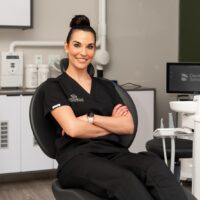 Dr. Chalita Le Roux is a general and cosmetic dentist in private practice in Roodepoort, Johannesburg. He received his BChD from the University of Pretoria (2020) and is a member of the South African Academy of Aesthetic Dentistry (SAAAD). HPCSA Registration Number: DP 0118702.


