

Do you want to gain strength after 60 without weight? Six bodyweight trainer moves.
Weight training is one of the most effective ways to build strength after age 60, but it’s not the only way to give your muscles a real challenge. Your body weight when the exercises are well chosen and performed with control, it can create a lot of resistance. Slower repetitions, pauses, deeper range of motion, single-leg stances, and longer holds can make training without equipment feel surprisingly powerful.
The main difference is how the resistance manifests itself. Weights load the body from the outside. Bodyweight training asks you to control your body through space. This means that your muscles are working, but your balance, coordination, joint control, posture, and core strength are also being reworked. For many adults over 60, this can make training feel more rewarding because strength is directly linked to standing, walking, pushing, bracing, and getting up and down from the floor.
Training without equipment can also be it’s easier to repeat. There’s no setup, no machines to adjust, and no need to plan around a gym schedule. A good bodyweight routine can fit in the morning, between chores, after a walk, or on days when a full workout feels like too much. This consistency is important because when the body receives a clear signal, strength improves.
The best body weight movements after 60 should still feel strength training. They should challenge large muscle groups, give your joints good positions to work, and make the last few reps feel meaningful. The six moves below cover lower body, upper body, hips, core, and stance so you can build strength without lifting a single weight.
Department
Bench squats work your quads, hamstrings, hamstrings, hips, and core, giving you a precise target for each rep. The chair helps you control your groove and makes it easier to repeat the movement with good form. This exercise gives you the strength to stand, sit, climb stairs, and move more confidently throughout the day. To make it more difficult, slow down the step down or pause briefly on the bench before standing up.
Muscles trained: Quadriceps, glutes, hamstrings, hips, core.
How to do it:
- Stand in front of a sturdy chair with your feet about shoulder-width apart.
- Brace your core and keep your chest up.
- Bring your feet back toward the chair.
- Bend your knees and lower with control.
- Press your hips lightly into the chair.
- Press through your legs to stand tall.
Recommended Sets and Reps: Do 3 sets of 10 to 15 repetitions. Rest 45 to 60 seconds between each set.
Best options: Sit on a chair, push up on a chair, stand on a chair, push up with body weight.
Form tip: Touch the seat slightly instead of fully resting on the bottom.
Incline Push-Up
Incline pushups work your chest, shoulders, triceps, core, and hamstrings. Elevating your arms over a wall, board, or sturdy surface allows you to build push-up strength while keeping your body flat. This move works like a bodyweight press because your upper body pushes against the resistance while your core keeps the rest of your body stable. Reduce the level over time as your strength improves.
Muscles trained: Chest, shoulders, triceps, core, glutes.
How to do it:
- Place your hands on a wall, board, chair, or sturdy, elevated surface.
- Step your legs back until your body forms a straight line.
- Strengthen your core and tighten your hamstrings.
- With control, lower your chest toward your hands.
- Bend your elbows at least 90 degrees if your strength and shoulders allow.
- Press your hands to return to the starting position.
Recommended Sets and Reps: Do 3 sets of 6 to 12 repetitions. Rest 45 to 60 seconds between each set.
Best options: Wall push ups, counter push ups, knee push ups, full push ups.
Form tip: Bend your elbows back slightly and press your entire hand.
Reverse network
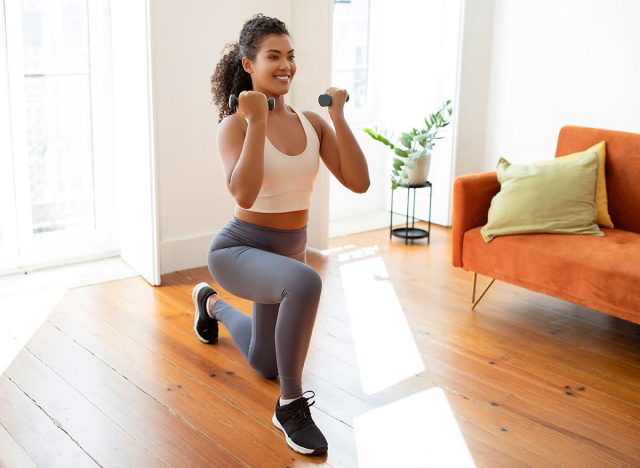
Reverse lunges train your hamstrings, quads, hamstrings, hips, calves, and core. Each leg works independently, which gives the movement more strength and balance than many bipedal exercises. The reverse step often feels smooth and controlled, making it a strong option for building strength after 60. If necessary, use a wall or chair for light support.
Muscles trained: Glutes, quads, hamstrings, hips, calves, core.
How to do it:
- Stand tall with your feet hip-width apart.
- Brace your core and keep your chest up.
- Bring one leg back to the limp.
- With control, lower your back knee toward the floor.
- Press to return to your front leg.
- Complete all repetitions, then switch sides.
Recommended Sets and Reps: Do 3 sets of 8 to 10 repetitions per side. Rest 45 to 60 seconds between each set.
Best options: Assisted reverse lunges, split lunges, reverse lunges.
Form tip: Keep your front feet on the ground and stand tall between repetitions.
Switch to the Glute Bridge
Push-ups train your hamstrings, hamstrings, lower back, hips, and core. Starting in a bridge position puts pressure on your lower back, then moving your legs farther will force your hamstrings to work harder to keep your hips up. This gives you a body weight version of posterior chain strength work that helps support walking, stair climbing, lifting and standing. Keep steps small and controlled.
Muscles trained: Bottles, columns, lower back, hips, core.
How to do it:
- Lie on your back, bend your knees and place your feet flat on the floor.
- Press through your heels and lift your hips.
- Strengthen your core and tighten your hamstrings.
- Take a small step forward with your feet.
- Bring your legs back towards your body while keeping your shins high.
- When the set is complete, lower your legs with control.
Recommended Sets and Reps: Do 3 sets of 6 to 8 reps. Rest 45 to 60 seconds between each set.
Best options: Bridges, bridge bridges, single leg bridges, shorter bridge crossings.
Form tip: Keep your feet tall and make each step small enough to manage.
Wall sitting in March
Wall sit-ups work your quads, hamstrings, hip flexors, calves, and core. Wall squats build leg strength, while lunges add balance and strength challenges. This movement can feel like a full-body workout because your legs are in a constant state of tension while your core works to keep your legs stable. Start higher on the wall and lower your stance as your legs get stronger.
Muscles trained: Quadriceps, glutes, hip flexors, calves, core.
How to do it:
- Stand with your back to the wall.
- Move your legs slightly forward and slide into a comfortable wall seat.
- Brace your core and keep your chest up.
- Lift one leg a few inches off the floor.
- Lower it with control.
- Alternate sides while maintaining your levels.
Recommended Sets and Reps: Do 3 sets of 8 to 12 reps per side. Rest 45 to 60 seconds between each set.
Best options: Standard Wall Seats, Wall Mounted Marches, Wall Mounted Heels, Single Leg Wall Mounts.
Form tip: Press into your standing leg and keep your back against the wall.
Plank with shoulder taps
Planks with shoulder presses work your abs, back, shoulders, chest, hamstrings, and deep core. The plank gives your midsection a powerful workout, and the shoulder roll adds movement so your core has to resist the side-to-side rocking. This exercise increases the strength you use to carry, reach, push, and stabilize your body during everyday movement. Start with your feet wider for better control.
Muscles trained: Abs, obliques, deep core, shoulders, chest, glutes.
How to do it:
- Start in a high plank with your hands under your shoulders.
- Place your feet wider than hip width apart.
- Strengthen your core and tighten your hamstrings.
- Raise one arm and touch the opposite shoulder.
- Put your hand down with control.
- Alternate sides while keeping your hips steady.
Recommended Sets and Reps: Do 3 sets of 8 to 12 reps per side. Rest 30 to 45 seconds between each set.
Best options: Inclined shoulder taps, kneeling shoulder taps, slow shoulder taps, standard high plank holds.
Form tip: Keep your grip relaxed and move your hand with control.
How to build strength after 60 without equipment
Strength training without equipment is best when you treat each exercise like real resistance training. Bodyweight movements become more challenging as you slow down, pause in tight positions, increase range of motion, or train one side at a time. The goal is to build muscle tension, not just move quickly through repetitions.
- Use speed: Slowly lower for 2 to 3 seconds in squats, lunges, lunges, and bridges. Slower repetitions work your muscles harder.
- Add stops: For added tension, hold the bottom of a chair, bridge, or middle of a wall sit.
- Train one side at a time: Reverse lunges and wall sit marches give each leg more individual work, which helps build strength and control.
- Calculation of final repetitions: Choose options that make the last few reps challenging while keeping your form clean.
- Repeat the procedure regularly: Do these moves 3 to 5 days a week, or use a few of them each day as short breaks.
Bodyweight training can build real strength after age 60 when the exercises create enough intensity and the routine is easy to repeat. Use your body as resistance, move with purpose and push the challenge as each movement gets stronger.


