304 North Cardinal St. Dorchester Center, MA 02124
Injury prevention: Proper storage of cleaning materials
Household cleaners, including kitchen cleaners and liquid laundry detergent, are the second most common poison among children under 6, according to the National Capital Region Poison Center. From the year COVID-19 the boom, the cleaning expanded. A recent survey by the American Cleaning Institute found that 53% of people reported using more cleaning products. While cleaning and sanitizing play an important part of maintaining good hygiene – maintaining safe cleaning habits should not be overlooked.
Proper maintenance of these products can prevent accidental hazards and make your home a safer place.
The road to improved safety
When it comes to using and maintaining this product, consider the following tips:
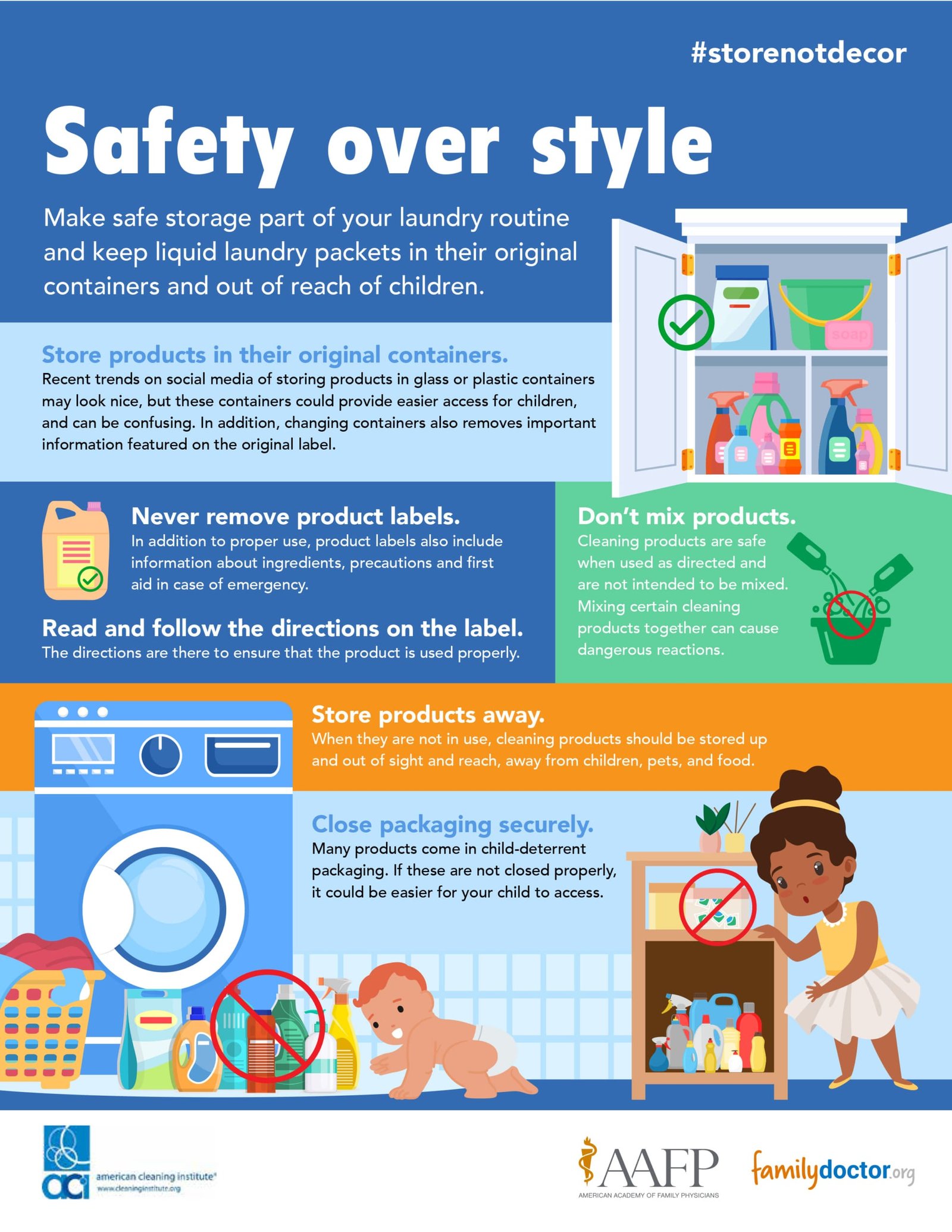
Store the product in its original container. Recent trends on social media to store products in glass or plastic containers may seem good, but these containers can provide easy access for children and can be messy. In addition, changing the containers also removes important information that was shown on the original label. When it comes to cleaning products, consider #StoreNotDecor to keep safety in mind during any home organization or improvement project to avoid potential poisoning.
Never remove product labels. In addition to proper usage, product labels also include information on ingredients, precautions, and first aid in an emergency.
Read and follow the instructions on the label. Instructions are provided to ensure proper use of the product.
Keep the product away. When not in use, cleaning products should be stored out of the sight and reach of children, pets and food.
Close the package securely. Many products come in child-proof packaging. If they are not properly closed, it will be easier for your child to access them.
Do not mix products. Cleaning products are safe when used as directed and are not intended for mixing. Mixing certain cleaning products can cause dangerous reactions.
Cleaning plan with children in mind. Choose the times when the children sleep at home or not.
Conduct regular safety inspections of your home. This can reduce the chances of accidents.
Assess the safety of other environments your child frequents. Investigate placement of house cleaners and laundry at daycare or even a relative’s home where your child is spending time.
In addition to following these steps, be sure to dispose of empty cleaning containers safely. Replace the lids first, then place the container in a sealed box or trash container.
Things to consider
Liquid laundry detergent packages have become popular in recent years. As with all cleaning products, they should be stored properly to avoid accidents in the home that can happen with small children around.
In a survey by American Institute of Purification36% of Americans say they believe they could expand their laundry space by putting detergent in glass containers, and 12% say they are already doing so.
While the overall exposure to liquid laundry detergent has decreased among young children, there are still some parents should take precautions:
Keep detergent bottles high and out of the reach and sight of children.
Close and seal containers completely after each use.
Always store packages in their original containers with the safety label.
Never display liquid laundry detergent packages in decorative bowls or glass containers for home decoration. When it comes to products that may be toxic to children, remember to “shop, not make up.”
Parents should also keep the poison control hotline number (1-800-222-1222) in an easily visible or accessible place in their home. If any cleaning product is spilled, you should call this number immediately.
Questions to ask your doctor
What are some of the most common chemicals children are exposed to?
What health problems can accidental exposure cause in children?
What if I’m not sure if my child has ingested one of these chemicals?
This content was developed in partnership with the American Cleaning Institute™.