

A look at one of the most studied compounds in modern medicine and what scientists have learned along the way
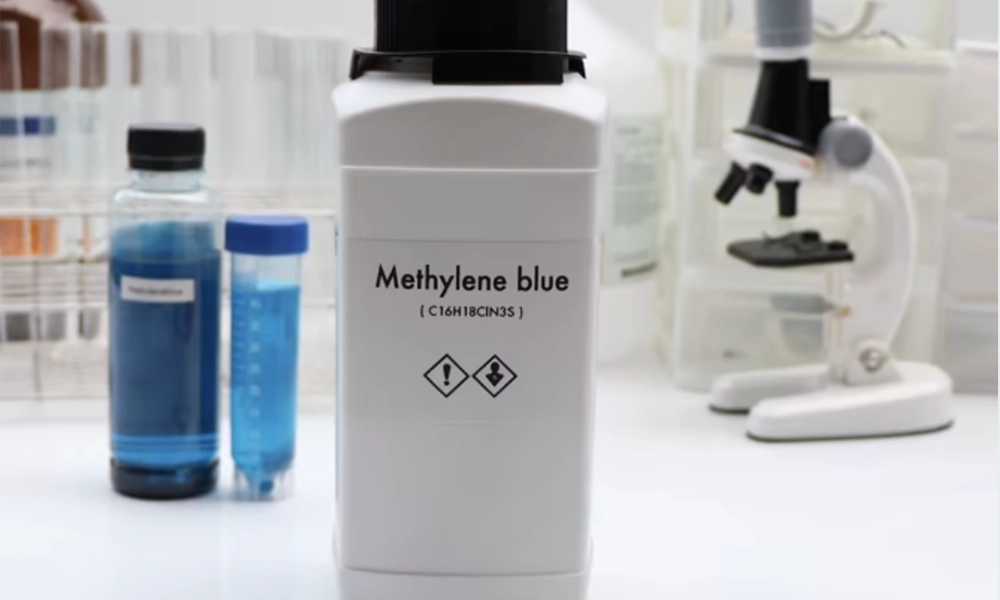
There are very few compounds in existence that have been studied consistently for over a century. Methylene blue is one of them. First synthesized in 1876 by German chemist Heinrich Caro, it was originally developed as a textile dye before researchers noticed something unusual. It had biological activity. This observation sent scientists on a path of research that has never stopped.
Today, methylene blue sits in an unusual position. It is both one of the oldest synthetic compounds in the history of medicine and one of the most actively researched. Understanding what this research actually shows requires separating what is firmly established from what is just emerging, and being honest about both.
Where did it start?
The first major medical application of methylene blue came in the 1890s, when German physician Paul Ehrlich used it to treat malaria. It was one of the first synthetic drugs used in clinical medicine and remained the standard malaria treatment for decades before being replaced by newer compounds.
From there, researchers discovered a number of other clinical applications. It was used to treat methemoglobinemia, in which the blood loses its ability to carry oxygen. This particular usage has never disappeared. Methylene blue remains on the World Health Organization’s list of important drugs for this indication to this day, making it one of the few 19th-century compounds still considered clinically relevant in the 21st.
Moving on to cell research
The modern phase of methylene blue research began when scientists began to understand in more detail how it interacts with cellular energy systems. Mitochondria, the energy-producing structures within each cell, have become a central hub.
Mitochondria generate energy through a process called the electron transport chain. Studies have shown that methylene blue can act as an alternative electron transporter in this system, essentially promoting the efficient functioning of mitochondria, especially under conditions of stress or dysfunction.
A study published in the journal FASEB by Atamna and colleagues in 2008 found that methylene blue increased complex IV activity in mitochondria by about 30 percent and increased cellular oxygen consumption by 37 to 70 percent. The same study noted the longevity of cells in tissue culture. These findings have generated considerable interest in the potential role of mitochondrial support in the context of aging research.
The Brain Health Connection
One of the most active areas in recent years is the connection between methylene blue and brain health. The brain is one of the most metabolically demanding organs in the body, consuming about 20 percent of the body’s total energy, even though it makes up only about 2 percent of the body’s weight. Therefore, mitochondrial function has a major impact on brain function and aging.
Researchers at the University of Texas Health Science Center published findings in the journal Radiology in 2016 from a double-blind randomized controlled trial with 26 subjects. A study reported a 7 percent improvement in memory retrieval in a group receiving low doses of methylene blue compared to a placebo. Researchers noted increased activity in areas of the brain associated with attention and sustained memory.
Separately, the Journal of Alzheimer’s Disease published a study that studied methylene blue in the context of cognitive performance with two randomized controlled trials, which noted improvements in cognitive perception and reduced brain volume loss compared to control groups without significant side effects.
It is important to read these findings carefully. They are promising, but the field is still developing. Most studies to date have involved relatively small sample sizes, and researchers consistently note that larger-scale trials are needed before firm conclusions can be drawn.
Question about dosage
One of the consistent findings in the research literature is that methylene blue varies greatly depending on the amount used. This is sometimes described as a hormetic dose response, meaning that low doses and high doses can produce completely different and sometimes opposite effects.
The studies that have generated the most interest tend to cluster around low doses, typically 0.5 to 4 milligrams per kilogram of body weight in animal studies and lower doses in human trials. At higher concentrations, the picture changes dramatically, and the researchers noted that beneficial observations on mitochondrial function usually disappear or are reversed.
This dose dependence is one of the reasons why researchers emphasize starting conservatively and why it is important to understand the concentration when obtaining methylene blue for research purposes.
Quality issues in research
For anyone studying methylene blue for personal research, the consistency of findings in the peer-reviewed literature depends on one factor that doesn’t always get enough attention: the purity and grade of the compounds used.
Research-grade studies use pharmaceutical-grade methylene blue of certified purity and contamination. Industrial-grade methylene blue produced for dyeing and processing chemicals has no such safeguards and can contain heavy metals and other impurities, making any personal research pointless at best and potentially harmful at worst.
USP-grade methylene blue, the pharmaceutical standard used in clinical medicine, sets strict limits for contaminants and requires identity and approved strength at each stage. Third-party testing from an independent, accredited laboratory adds another layer of verification beyond what any supplier can self-report.
Blue elevator is an example of a supplier that offers USP-grade solutions of third-party methylene blue, tested in an independent accredited US laboratory with more than 30 quality tests per batch, including heavy metal screening. Specific certificates of analysis are available upon request, and customers are encouraged to verify results directly with the testing laboratory.
What the research doesn’t say
It would be remiss to present a landscape of methylene blue research without acknowledging what remains unresolved. Most of the most cited findings come from animal models or small human trials. Peer-reviewed science moves slowly by design, and the standards required to make accurate clinical claims about any compound are, for good reason, rigorous.
Methylene blue is sold for research purposes, and responsible suppliers make it that way. The science is really interesting, and the continuity of research interest in this connection is important. But anyone who approaches it should do so with the same curiosity and critical thinking that is applied to any emerging field of scientific inquiry.
A collection worth watching
More than 18,000 published studies refer to methylene blue. It’s not a number that stacks up around something that researchers find interesting. The fact that the compound, which was first synthesized in Victorian England as a textile dye, still generates peer-reviewed research that inspires genuine scientific curiosity about its biological complexity.
Whether the current wave of research into brain mitochondrial function and cellular longevity will ultimately produce the results that the early findings suggest remains to be seen. What is clear is that methylene blue has earned its place as one of the most consistently studied compounds in modern science, and the conversation is far from over.
- About the Author
- Latest news

Our editorial team are writers and experts in their field. Their views and opinions are not necessarily those of Wellbeing Magazine. If you are under medical supervision, talk to your doctor or therapist before following the advice and recommendations in this article.


