
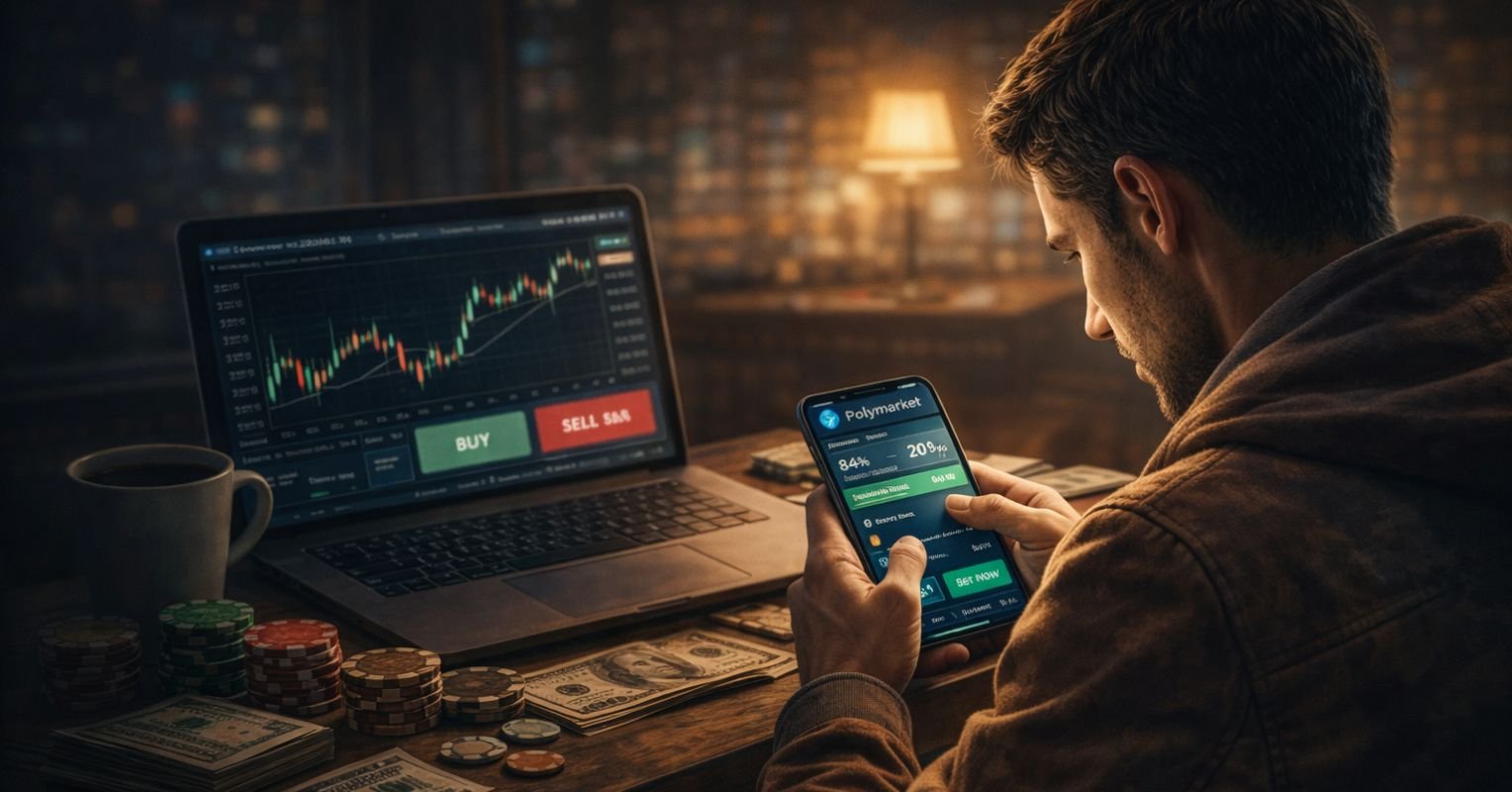

In 2026, people will be more empowered than ever when it comes to making financial decisions. Every year, millions of people bet on sports, bet on political events in prediction markets, or try their hand at day trading stocks or cryptocurrencies. Modern financial tools like Robinhood for trading digital investments allow people to buy and sell assets instantly and seamlessly. New betting platforms like Polymarket allow people to bet on a large number of uncertain outcomes, including who will win an election or whether the price of Bitcoin will rise or fall in the next five minutes.
Why combine all these things? Because people usually lose money on average in all of them. Casinos for traditional gambling, Robinhood for day trading and Polymarket for betting are all profitable because the house generally wins. Although investing is generally profitable, 97% of day traders do not outperform the overall market index (such as the S&P500) and many lose money over time. And the underlying psychology behind these seemingly silly betting/gambling/investment platforms is the same. Below are three psychological reasons why people like betting.
1. Interval rewards are powerful
One of the most established findings in psychology is the concept of intermittent reinforcement, defined as a schedule in which rewards are given randomly or inconsistently – while driving repeated behavior. The inconsistent nature of this mechanism creates excitement in the uncertainty of the outcome. A clear example comes from slot machines, where players lose money on average, but randomly win occasionally, thus reinforcing the behavior. Gaming machines feature an arm that the user pulls, creating the illusion of control over your outcome and the addictive psychology of behavior that results from intermittent reinforcement.
When we know for sure that we will be rewarded for doing something, we tend to do it, even though the reinforcement may be less because the outcome is predictable and lacks excitement or uncertainty. When we know for sure that we will not be rewarded for any behavior, the behavior stops quickly. However, when rewards for a behavior are given occasionally, we are especially motivated to continue working for the reward. Gambling, day trading, and betting all have intermittent reinforcement as key feeding behaviors due to the uncertainty of whether you will win or lose. Usually, winning happens occasionally, while losing happens more often, when winning causes more excitement.
2. Overconfidence and the illusion of mastery
Overconfidence in one’s abilities is a key feature of gambling. In a podcast by comedian Bill Burr discussing this topic, he made a sarcastic claim about sports betting along the lines of: “When I bet, do I believe I know more than the combined data of experts, statistics, and the multi-million dollar algorithms that bookmakers use to overcome the odds, of course I do!” He’s not alone: Whenever someone makes a bet or takes a bet, you can read between the lines and basically tell they’re overconfident about the odds. But that logic goes out the window if the player gets lucky and wins his bet.
The overconfidence associated with intermittent reinforcement of winnings leads bettors to experience the illusion of mastery. When they win, all the thoughts and feelings that led to the bet are confirmed, convincing the bettor that they were logical rather than lucky. On the other hand, losses are attributed to bad luck or something that can be learned from to improve their bets in the future, rather than a rational acceptance of the fact that the house wins on average.
3. Circle in real time
Swift contact is the third and final key feature of modern betting machines. Day trading assets with constant price changes or placing an advance bet on whether the price of Bitcoin will rise or fall in the next five minutes gives the user instant feedback on their performance. It takes the user attention through the need to constantly check odds, prices or odds that can increase attraction or entertainment. Constantly checking the price of a volatile asset like Bitcoin all day creates an emotional rollercoaster for the bettor that can turn the behavior into compulsiveness over time. Wins are celebrated and the goal is to repeat, while losses must be remedied by doubling up and refunding money.
Conclusion
Modern gambling has given people a wider and deeper net to bet on anything they want. Gamification increases the appeal of betting websites and apps by providing users with a seamless interface with an engaging user experience and instant feedback. In the same way Social media platforms have become more gamified and addictive, as algorithms have developed over time, betting and commodity platforms will likely follow suit. Applying the lens of classical psychology to modern betting can explain why people are so attracted to financial bets and show us how users can avoid the trap of being attracted to them.


