
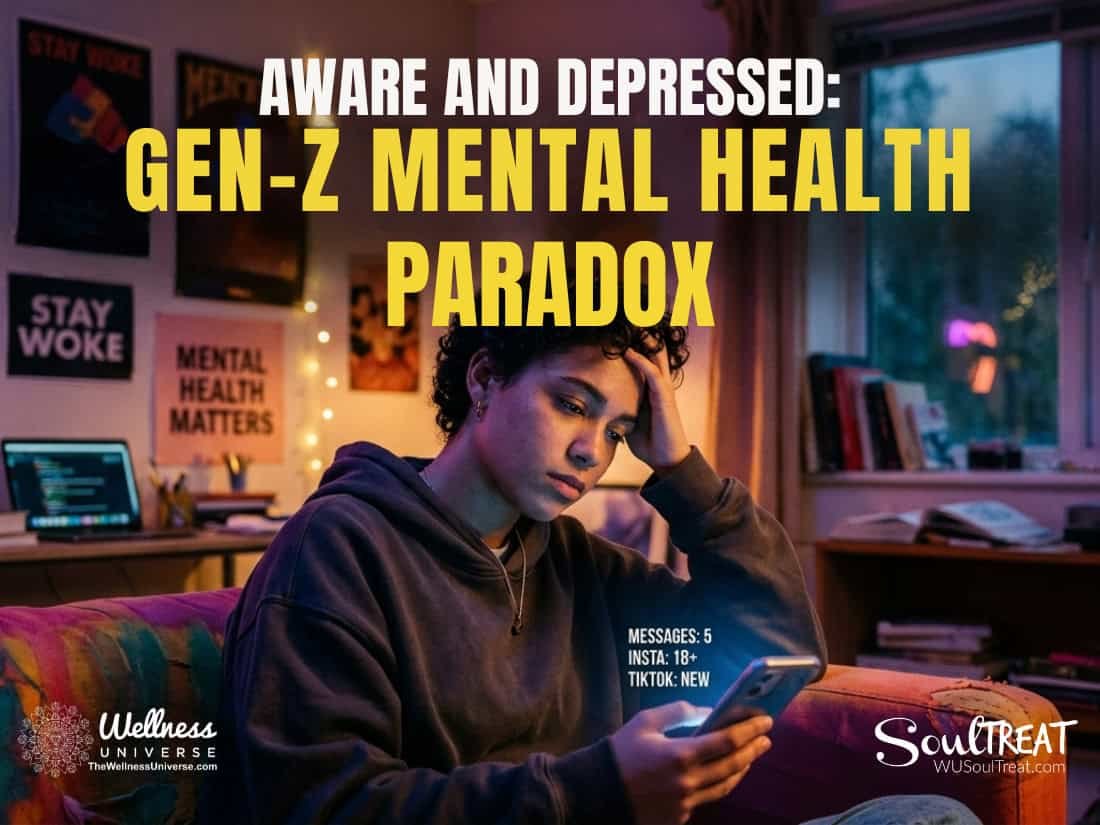
The Gen Z Paradox
Gen Z is the living embodiment of the word paradox. This is the generation that was promised flying cars and hoverboards and instead got ten different monthly subscriptions. Interestingly, they live in a global village with tens of thousands of followers; however, they record some of the highest levels of loneliness. Ironically, this is the first generation to talk openly about mental health and therapy, but still, they are burned out and sad. Simply put, they’re maturing, unlike millennials or baby boomers who figured out life in their 20s.
Surprisingly, this is not only due to social pressures and stigmas; it’s also because of the habits that Gen Z has adopted over time, making them the new normal. Many of these habits did not appear out of nowhere – they are understandable responses to a strange and demanding world. Comparison, constant comparison and weighing of life in the name of networking and maintenance are often treated as necessary. These habits are said to be quietly detrimental to mental health.
Morning overstimulation
In recent years, especially after the pandemic, the first thing people do when they wake up is check their phone. If you do too, you are not alone. These temptations make sense in an ever-changing world—we want updates, gossip, and reassurance. However, what may seem innocuous can cause fear and insecurities and make it harder to interact with the real world.
Over time, this overstimulation affects more than just mental health; it also manifests physically through headaches, nausea, and brain fog.
For this reason, excessive stimulation should be minimized. Keeping phones out of reach, enjoying meals without a screen, and turning off notifications can all help slow internal clutter. These small actions support better focus and a calmer state of mind without requiring drastic lifestyle changes.
Social media and the circle of loneliness
For Gen Z, social media is the main source of connection. However, loneliness is still widespread. While social media should in theory reduce isolation, it often does the opposite. Constant comparison and pressure to stay ahead of peers creates anxiety, fear of failure, and depressive thoughts.
That’s why face-to-face conversations are still important. Simple interactions—like talking to the cashier or going outside for a walk—can dramatically improve thinking. Appreciating real relationships instead of focusing on the online lives of others helps restore emotional balance and a sense of belonging.
Avoiding resistance and emotional retardation
For Gen Z, coping with avoidance often manifests as moving around, binge-watching, gaming, or sleeping too much to relieve stress. Although it offers short-term relief, it does not solve the underlying problem. As stress accumulates, anxiety and depression increase, eventually leading to emotional exhaustion or numbness.
The value of being “always on”.
Another important factor is the constant availability. Being constantly available through notifications and messages keeps the brain in a near constant state of alertness. As a result, the boundaries between work, social life and leisure disappear. Over time, this causes stress, anxiety, sleep disturbances, and emotional exhaustion.
Setting clear boundaries helps to combat this. Turning off non-essential notifications, using Do Not Disturb when you’re sleeping or working, and creating phone-free zones, such as bedrooms or mealtimes, allow the brain to recharge. These small shifts reduce stress and improve focus without demanding perfection.
Warning against charges
After all, Gen Z is not broken or weak. This is a generation that reacts to a loud, fast and endless environment. These habits aren’t born out of laziness or failure—they’re developed as survival mechanisms. However, survival habits are not always sustainable habits.
Real change doesn’t come from deleting every app or becoming disciplined overnight. Instead, it comes from choosing presence over autopilot, connection over comparison, and relaxation over constant presence. Small, intentional shifts can slowly silence the noise and make room for clarity, balance, and true well-being.
Quotes
- Harvard Health Publishing. (2022). Doomscrolling: Perils of endless scrolling. https://www.health.harvard.edu/mind-and-mood/doomscrolling-dangers
- Mental Health DE. (nd). Loneliness in the age of social media: Why we feel isolated despite being connected. https://www.mentalhealthde.com/blogs/loneliness-in-the-age-of-social-media-why-we-feel-disconnected-dtitude-being-connected
- Psychology today. (2018). The social network will stop. https://www.psychologytoday.com/us/blog/home-base/201802/the-social-media-disconnect
- Hayes, SC, Wilson, KG, Gifford, EV, Follette, VM, & Strosahl, K. (2004). Experiential avoidance and conduct disorders: A functional measurement approach. Journal of Counseling and Clinical Psychology, 72(4), 673–688. https://doi.org/10.1037/0022-006X.73.4.658
SoulTreat Retreat 2026
April 28 – May 1
Give yourself the gift of loving care. Come to SoulTreat!
Take me to SoulTreat
Transformational Journeys Workshops
Ready for growth, healing and inspiration?
Dive deep into the tools and insights shared by our expert authors The Global Wellness Guide to Self-Care, 25 Tools for Change! Brought to life in engaging and interactive workshops that will empower and inspire you. Each author leads a workshop built around it
The unique strategies they contribute in this book will give you first hand
access to the wisdom behind the pages.
👉 Register here: https://bit.ly/ATJWorkshops
#1 BEST SELLER AVAILABLE NOW!
The Global Wellness Guide to Self-Care, 25 Tools for Change
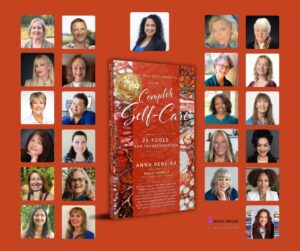
Ready for a soft reset at real speed? The Global Wellness Guide to Self-Care: 25 Tools for Change is a 5-star Amazon favorite and readers say
“This book should be your bedside table manual.”
Open any page, select a tool, and let a small change be your next breakthrough.

Wellness World is your resource for health, wellness, wellness and transformation. We serve and support professionals who make the world a better place and individuals and groups who seek to live their best lives.
A woman’s company; Anna Pereira, who had a vision in 2013, launched the first directory in 2015, bringing together a community of members who want to make the world a better place for those who are looking for their best life. The Wellness Universe has since become a one stop shop for wellness health support! We are a verified community, online directory, book publisher, resource center, event producer, content platform, and more, supporting health and wellness on a global scale.
The Wellness Universe is a home that connects industry professionals in the fields of health, wellness and wellness with general wellness seekers. WU provides WU World-Changer members with peer support, Wellness Universe events (live and online), projects, visibility, business and community mentorship. Through The Wellness Universe, our WU World-Changer members serve WU friends, health, wellness and change seekers with coaching, workshops, content and more.
World of Wellness provides individuals and groups seeking to live their best life, access to our members, healthy content, educational resources and guidance in all areas of wellness to achieve a vision of how they want to live.
Through directory, Featured WU blog, SoulTreat health vacation, Self care booksgroup wellness programs and an online learning center, LoungeThe World of Wellness offers many ways to support your overall health, mind, body, spirit and planet.
Join us today! Health professional or Find your best life
Post Views: 5


