
Since 1897, Jello has filled happy bellies as a sweet treat. You can associate it with eating a low-calorie diet, in hospital trays and school lunches/cafeteria. Kraft foods owns Jell-O. It can be sold as a powder or premix.
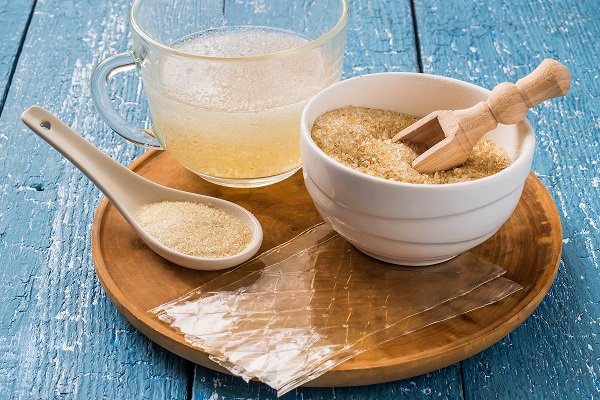
The main ingredient of this product is gelatin. It comes from animal collagen, which is found in connective tissues such as bones, cartilage, skin, and ligaments. Cows and pigs are usually used to boil, dry and process the bones with a strong acid base to extract the collagen. The collagen is dried, ground into a powder, and then turned into the finished gelatin product. Because gelatin is derived from animals, it is not considered vegetarian or vegan.
Gelatin is what gives Jell-O its jiggle. Colors, sweeteners and flavoring agents are other ingredients. Aspartame is commonly used because it retains the “calorie free” label. The color is derived from artificial food coloring. There is a need for natural jelly, so they use beet and carrot juice. The popular version of Strawberry Jell-O contains sugar, gelatin, adipic acid, artificial flavor, disodium phosphate, sodium citrate, fumaric acid, and red #40. If you want natural, label reading is a must.
In terms of being healthy, it depends on how Jell-O is made. One serving (21 grams of dry mix) has 80 calories, 1.6 grams of protein and 18 grams of sugar (4.5 teaspoons). On the other hand, one serving (6.4 grams of dry mix) of the sugar-free version made with aspartame has 13 calories, 1 gram of protein, and no sugar. The consequences of artificial sweeteners cannot be overlooked. Gelatin comes from collagen, which is good for bone health and joint pain. It can help with skin aging. The amount of collagen in Jell-O may not be enough to provide significant benefits.
Food choices always have pros and cons. Some people actually enjoy Jell-O for what it is. Others eat it as an alternative to sweets, which they consume with more sugar and fat. Jell-O with whipped cream, in dishes and even with alcohol are reasons why it can be found in the kitchen. It’s “old school” and sometimes simple and easy is why we eat things. Jell-O keeps it handy.
How Jell-O Made Its Way to Pop Culture Greatness – JSTOR Daily
Gelatin preservation technologies on food quality: a comprehensive review – PubMed
A review of the effects of collagen therapy in clinical studies – PMC

Dr. Megan Johnson McCullough owns a fitness studio in Oceanside CA called Every BODY’s Fit. He holds a PhD in Health and Human Performance, an MA in Physical Education and Health Sciences, and is a NASM Certified Trainer and Educator. She is also a professional natural bodybuilder, fitness model, wellness coach and AFAA group instructor. He also has 6 books on Amazon.


